
Transport for healthier communities – Esme Yuill
It might be because my social feed is full of videos of 80 year olds lifting heavy and ads for collagen – but staying healthy for as long as possible is starting to become a more of a motivator for me.
Keeping people healthier for longer is also becoming a bigger policy focus for government. Healthier people can stay in work longer, can volunteer for longer, can stay involved with their communities and generally just be happier. People staying healthier for longer will also reduce costs and demands on the NHS, the benefit system and social care.
This challenge cannot be solved by health professionals alone. It is a cross-government issue that needs attention at all levels – including those of us working in transport.
How to create places that support people to live healthier lives for longer was the topic of the Coastal Navigators Network Healthy Aging Summit, held in Southend last month. The contents were a real eye-opener for anyone involved in planning for the future – and transport came up as a regular issue in the workshop discussions.
The challenge of ageing healthily in the East
The East has an older and ageing population. According to the ONS, by 2040 the number of over 65s in the East of England will increase by over 145,000 to 770,000 and the number of people living to over 90 will almost double to over 47,000.
Our coastal areas are older still – for example 25% of Canvey Island residents are over 65 and over half of all adults on the island have multiple health conditions. Our coastal towns are also, literally, at the end of the line – for road and rail connections, making it harder to access services and opportunities.
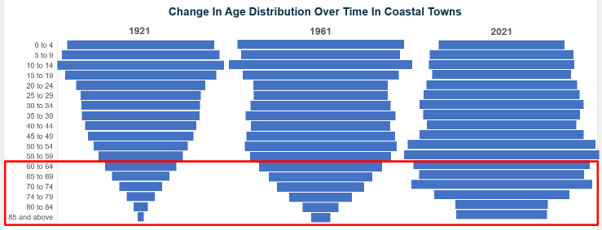
Fig 1 – National ageing trends for coastal towns. Source: Coastal Navigators Network
There is also a significant link between deprivation, age, health and coastal communities. People in our coastal towns are more likely to be poorer and less healthy than those in inland places.
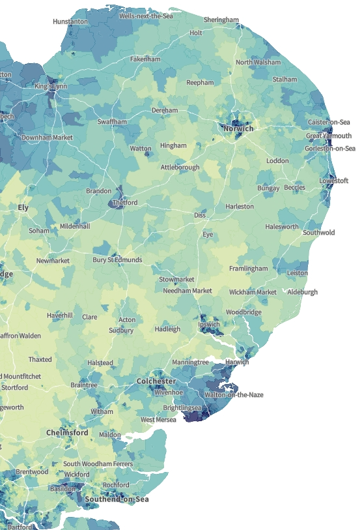

Fig 2: Map showing health & disability deprivation for the East. Source: Health & Disability | Local Deprivation Explorer
Our work on Transport Related Social Exclusion explores the connections between transport and deprivation, which is a strong factor in healthy living. Of the top ten districts with the worst levels of transport related social exclusion – 6 of them are largely coastal districts.
The transport/ health connection
So how can the decisions we take on transport help people living in the East stay healthier as they age?
Transport and health interact in a myriad of ways.
- Safer pedestrian and cycle routes encourage people to get and stay active through day-to-day journeys – helping meet the Chief Medical Officers physical activity guidelines
- Transport to work, training and volunteering keeps people earning, learning and engaged with their communities
- Regular bus services with more space for wheelchairs and mobility aids, visual displays and audio announcements help people access the services they need and reduce isolation
- Health and social care workers need to be able to access work locations -complicated by shift patterns and multiple sites.
- Well maintained pavements with dropped kerbs at junctions and without parked vehicles make it easier for people to get around their neighbourhoods – without trips and falls
- Lower levels of air pollutants like CO2 and particulate matter reduces lung diseases, heart diseases and strokes
- Community transport provides an essential link for those with disabilities and age-related health conditions to get to treatment and social activities
- Regularly accessing green and blue spaces, like parks, rivers and the sea front can improve mental health
- Healthy Streets with benches to stop, safe crossings and shade from trees make it easier to walk further
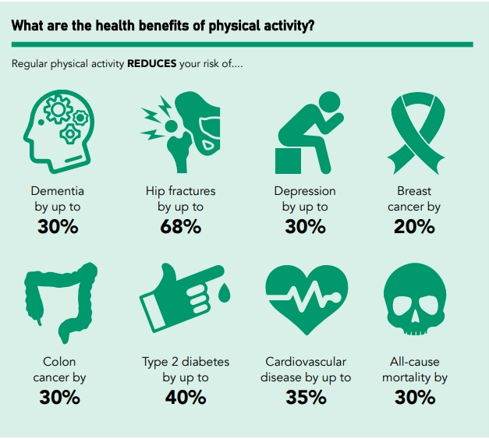
Fig 3: Data on the health benefits of physical activity. Source: DfT Gear Change 2020
This work needs to be preventative too. We can’t just be making it easier for older people to stay more active – we need to be making it easier for everyone to stay more active and access the health services they need as they age.
Collaboration is key
Taking a place-based lens to this issue is essential. Which is tricky while both the regional health structures and local government are shifting. However, over the next few years should unitary councils and mayoral authorities form in the East, there is a real opportunity for closer working and more flexible funding to tackle these issues holistically. Many changes are not particularly expensive, they just need to be thought about fully and earlier in the decision-making process.
How will our communities change?
What will more older people need from our places and transport?
How can we better plan for those changes?
What new systems, processes, funding and structures do we need to really create ageing friendly places and transport?
Evidence also shows that changes that benefit older people also make it easier for many of us to get around – so creating places that work for older people helps everyone.
We’d love to hear about any transport schemes on the ground that are taking a specific age or health angle – so we can share with others.